.png)
Monitte Lantas: Carrying Tagbanwa Roots into Youth Leadership in Southern Palawan

Updated: 2 days ago
How UGNAYIN PH and the Green Livelihoods Alliance helped a young leader find her voice for culture and forests

Monitte Lantas introduces herself plainly – “Ako si Monitte Lantas. Isang katutubong Tagbanwa mula sa Bayan ng Narra, Probinsya ng Palawan. (I am Monitte Lantas, an indigenous Tagbanwa from the town of Narra in the Province of Palawan.)” – but the path behind those words carries a steady, expansive story. From a young woman who once felt shy to speak her people’s language, she is now an organizer, public servant, and youth mentor determined to protect Palawan’s forests and keep her Tagbanwa culture alive for the next generation.
Roots and First Sparks

Asked what being katutubo means, Monitte points to pride and practice: immersing in one’s culture and traditions and knowing how to carry them beyond the community. “Ang pagiging isang katutubo ay pagmamalaki. Ito ay kung paano mo ipakilala ito sa labas ng komunidad mo. (Being indigenous is about pride. It’s about how you carry and introduce it beyond your community.)”
Ang pagiging isang katutubo ay pagmamalaki. Ito ay kung paano mo ipakilala ito sa labas ng komunidad mo.
Her first model of this courage is close to home, her aunt who fearlessly fights for and protects, and one who insisted that women speak up even when it wasn’t customary. “Nangunguna talaga siya. (She truly leads from the front.),” Monitte recalls. That example is the template she keeps returning to as she learns to lead.
Waking Up to Deeper Issues
Monitte’s political awakening didn’t happen overnight. It sharpened as civil society partners entered their community. Among them is NTFP-EP Philippines and Bantay Kita, which opened her eyes to the layered struggles inside ancestral domains. “Akala ko dati basura lang yung problema. Pero nung nakikibahagi na ako, may mas malalim pa pala sa loob ng komunidad namin. (I used to think that waste was the only problem. But when I started getting involved, I realized there were deeper issues within our community.)”
Akala ko dati basura lang yung problema. Pero nung nakikibahagi na ako, may mas malalim pa pala sa loob ng komunidad namin.
Finding a Home in UGNAYIN PH
When the Ugnayin National Indigenous Youth Network Philippines (UGNAYIN PH began forming, it naturally fit. What kept Monitte engaged wasn’t just structure, it was also through the practice of showing up. “Hindi naman magpapatuloy ‘yun kung wala yung active participation (It wouldn’t have been sustainable without active participation.),” she says. UGNAYIN PH mirrored her community’s needs and exposed her to peers from various regions grappling with similar issues. It was fertile ground to grow her voice.
She’s frank about the shift: “Hindi ako ganun ka-good leader. Iniisip ko na ‘kaya na ng mga matatanda yan.’ Pero dahil sa UGNAYIN, mas nahubog yung kakayahan ko. Kailangan mo ring bumoses. (I wasn’t much of a good leader. I used to think, ‘the elders can handle that already.’ But because of UGNAYIN, my abilities were developed. You also need to speak up.” In that space, she learned that youth concerns need to be said aloud, so that elders can recognize and act on them.
Dahil sa UGNAYIN, mas nahubog yung kakayahan ko. Kailangan mo ring bumoses.
The peer-to-peer space mattered. During early online sessions (pandemic days), she watched fellow youth leader Kristel “Boniknik” Quierrez showing relentless action and thought, sana ako rin ganito (I wish I was like her). That admiration became inspiration.
“Through exchange of ideas, nakukuha ko kung paano ko ipagpapatuloy, kung paano rin yung gagawin ko sa loob ng komunidad ko. (Through exchanging ideas, I learn how to keep going, and what I should do within my own community.”
GLA’s Backbone and Why It Matters
Many of the exchanges, leadership spaces, and community-based learning that shaped Monitte’s journey sit within NTFP-EP Philippines’ work under the Green Livelihoods Alliance – Forests for a Just Future (GLA). By resourcing local organizing and inter-community learning, GLA helps networks like UGNAYIN PH convene, train, and sustain young indigenous leaders, so the work of safeguarding cultures and forest conservation doesn not become a solitary climb, but a shared or communal ladder.

From Student to Public Servant
Today, Monitte carries her advocacy into formal governance. She serves as a Sangguniang Kabataan (SK) member and currently leads her local Nagkakaisang Kabataang Katutubo ng Narra (NKKN) youth council. She didn’t plan to enter politics, she admits, but realized local power can, and should, carry indigenous youth agendas. “Bakit hindi natin ipasok ito sa lokal na level para marinig, makita, at mabigyan din ng solusyon? (Why don’t we bring this to the local level so it can be heard, seen, and actually addressed?)”
The Frontlines in the “Last Frontier”
From Southern Palawan, Monitte watches mining applications pile up and participation remain thin, with only about 10–20% of indigenous youth actively engaging on environmental issues in her municipality. She wants that number to grow.
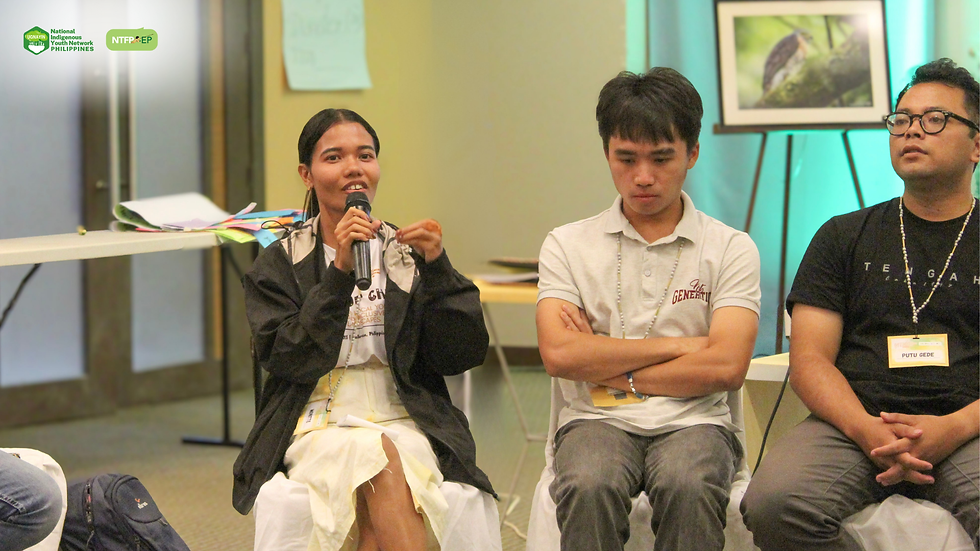
Her core advocacy is clear: environmental protection in a province famed as the country’s “last ecological frontier,” and active youth participation so the work outlives the current wave of leaders. “Ayaw ko na masira ito. Baka sa susunod wala na (I don’t want this to be destroyed. (I’m afraid) it might disappear soon,” she says of Palawan’s forests, expressing hope that many more youth will follow as she ages out of the “youth lens.”
Culture as Daily Practice, Not Performance
Monitte’s longing is as cultural as it is political. She wants Tagbanwa practices to be lived within the community and not staged only during Indigenous Peoples (IP) Month. “Sana yung mas culture-based talaga sa loob lang ng komunidad – nakikita, ginagawa. (I wish it’s more culture-based and something visible and practiced within the community.)” She’s pushing for School of Living Tradition (SLT) opportunities with elders, and, if needed, she will be the first student.

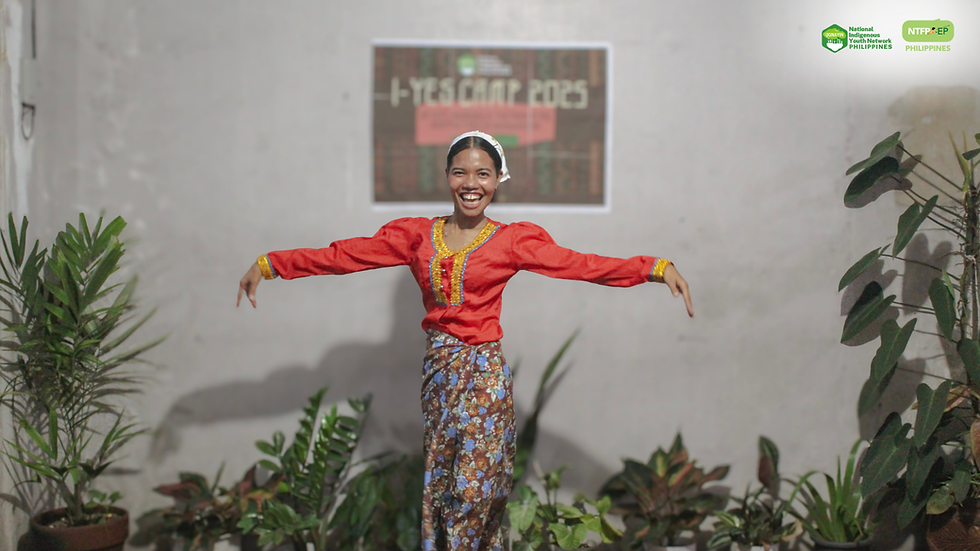
This sits beside a personal transformation where she once felt shy to speak Tagbanwa. Now, she answers her elders in their mother tongue, confidently returning one conversation at a time. “Nawawala yung essence ng pagiging katutubo kapagka hindi siya nakikita. Gusto ko na nakikita siya na, ‘ah ako, katutubong Tagbanwa talaga ako.’ You need to be proud. (The essence of being indigenous fades when it isn’t visible. I want it to be seen like, ‘ah, I truly am a Tagbanwa indigenous person.’ You need to be proud.)”
Nawawala yung essence ng pagiging katutubo kapagka hindi siya nakikita. Gusto ko na nakikita siya na, ‘ah ako, katutubong Tagbanwa talaga ako.’ You need to be proud.
Dreams with a Paper Trail
In the near term, Monitte plans to stay rooted in her youth organization for two to three years to strengthen its foundations, secure sustainable funding, and document their Ancestral Domain Sustainable Development and Protection Plan (ADSDPP) so younger Tagbanwa have something concrete to inherit. “Culture is changing, kaya habang maaga pa, nado-document na siya. (While it’s still early, it should be documented.”
A Message to the Next Wave of IP Youth Advocates
She leaves a note in Tagbanwa first, then in Filipino: youth shouldn’t be afraid of the problems in the community, there are many solutions, and it’s on them to take up the challenge.
Monitte proudly speaks in her own native language: "Ingka Tagbanwa. erog ko nga angga sira me lam. Ing un mga problema asan kat komunidad nga yung unay magka anoan nira. Aga sira me lam ka, dakil nga problema magka anwan tami et komunidad. Taka may mga solusyon taming mga mabuhat na ga bilang mga kabataan. So, ing ako, magka buhat koy mga at kay mga bagay, so, erog ko nga na eat mga kabataan na susunod, ay magka ruot naga. Arot nira yung paano nira ma-solusyonan yung mga problema et komunidad. Baw ing paano nga makapagpatuloy bilang mga kabataan."

“Huwag tayong matakot. Gawin nating inspirasyon yung mga issues o challenges sa komunidad. I-challenge natin yung sarili natin: ‘kaya kong gawin itong bagay na ’to.’ (Let’s not be afraid. Let’s make the issues or challenges in the community our inspiration. Let’s challenge ourselves: ‘I can do this.’)”
Gawin nating inspirasyon yung mga issues o challenges sa komunidad.
UGNAYIN PH is the national indigenous youth network where Monitte serves as Secretary; it’s been a key space for her leadership journey. From peer learning, to exchanges, and visible roles that helped raise her voice, NTFP-EP Philippines, under the Green Livelihoods Alliance – Forests for a Just Future, supports these community-rooted processes. Culture and forests are protected by those who live with them, and leadership keeps regenerating from within.


Comments