.png)
When the Mangroves Ask for Time

Updated: 2 days ago
From Youth Vision to Mangrove Conservation: How Monitte Lantas and Indigenous youth organization NKKN are turning advocacy and local knowledge into a youth-led mangrove conservation effort in Narra, Palawan
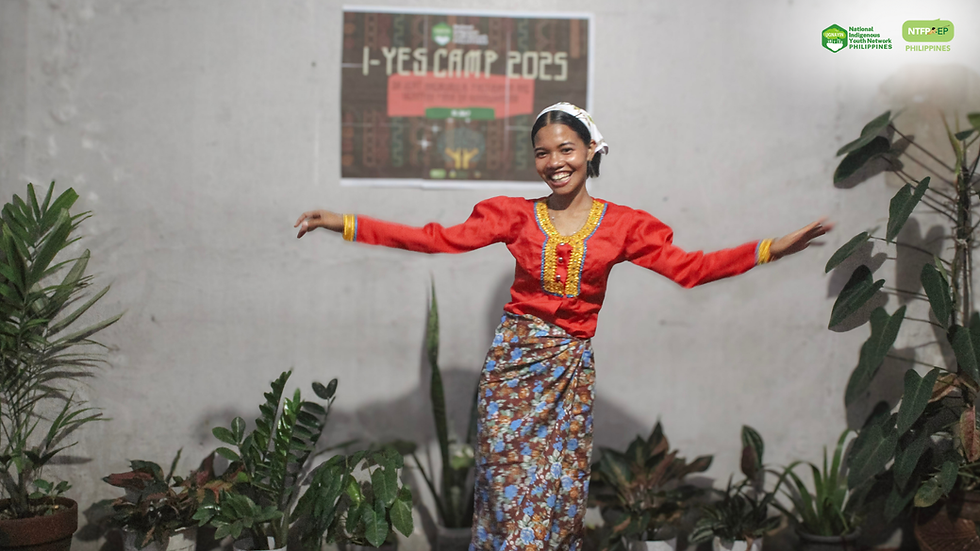
Answers have been edited for brevity.
In Southern Palawan, where forested mountains lean toward the sea, Narra holds many kinds of memory. Some are carried by elders, some by young people learning to document what the elders know, and some by the coast itself; by the places where mangroves once stood thicker, cooler, and louder with life.

For Monitte Lantas, a Tagbanwa youth leader and president of the Nagkakaisang Kabataang Katutubo ng Narra (NKKN), mangroves and their conservation are not merely targets, they are part of memory, of childhood, and of identity. Today, at 24, she is helping turn those memories into action as president of NKKN, an Indigenous youth organization designing its own response to the changes unfolding along Narra’s coast.
She remembers accompanying her parents to the shore more than 10 years ago, when crabs were still plentiful and large enough for one family’s meal. Sometimes, she recalls, one crab could weigh up to one and two kilos. The land where the ocean and river meet amongst the groves had seagrasses underfoot, shells littered along the coast, and the familiar, comforting sounds of small creatures in the mangroves at dusk.
Now, Monitte says, in a melancholy, that the place feels different, like something is missing.
Unti-unti na siyang nawawala… dati, ang dami pang nakikita.
(Little by little, it is disappearing… before, we used to see so much.)

Monitte does not solely name one reason. In a conversation, the 24-year-old spoke of habitat loss, the heat from a changing climate, the disappearance of seagrass, and the decline of marine life in places where coastal ecosystems have been disturbed. In a country where mangrove cover has fallen from an estimated 450,000 hectares in 1920 to around 311,400 hectares in recent statistics, NKKN’s concern is part of a much wider story of coastal loss, but it begins, as many urgent things do, in one familiar place.
NKKN itself began recently, in 2021, when around 15 Indigenous youth in Narra first gathered through a meeting led by NTFP-EP Philippines. Monitte entered without knowing an organization would be formed. She first served as secretary, then later became president. Before NKKN, Monitte couldn’t find any Indigenous youth organizations in Narra.
Like mangroves, the group started small, with its young roots finding anchor in difficult ground. Before the Nature’s Heartbeat project, NKKN carried out coastal clean-ups, tree planting, outreach programs, and youth empowerment activities, mostly through volunteer work. Through these, more young people began asking how they could join, with members encouraging other young indigenous peers to take part. Even younger children, aged 11 to 14, wanted to be involved, their parents also asking for their children to become members.

When Nature’s Heartbeat gave NKKN space to identify the conservation work they believed their community needed, the youth returned to something they already knew was disappearing.
For Nature’s Heartbeat, NKKN chose a mangrove conservation project covering around five hectares in Barangays Antipuluan and Aramaywan, with the goal of planting around 2,000 seedlings and strengthen at least 50 Indigenous youth. The project includes hands-on training on restoring mangroves, climate change and biodiversity, environmental leadership, mapping and geotagging, and advocacy campaigning.
The work is not only about planting the Bakawan (mangroves), it involves learning the proper way of planting to increase survival rates, monitoring seedling growth and survival, mapping conservation areas, documenting changes, and empowering Indigenous youth to be more visible in conservation spaces too. NKKN aims to connect with the local government units (LGUs), the Department of Environment and Natural Resources (DENR), foresters, academe, local communities, NGOs, and IP elders who can guide knowledge transfer and keep the project grounded on scientific, community-based, and indigenous ways.

For Monitte, youth-led conservation is also a way of resisting silence — the silence of disappearing mangroves, and the silence imposed when Indigenous youth are afraid to speak. Her story challenges the familiar notion of young people as the “next generation” of environmental leaders. In Narra, youth are already documenting community knowledge, joining conservation work, organizing their peers, engaging the government, and now, they’re designing their own conservation projects. She wants people to understand that being active in environmental work is not something to fear or stigmatize. It is, she said, with her head held high, pro-life, always rooted in active non-violence.

We asked what the mangroves would say if they could speak, and Monitte answered giving voice to the shore itself:
Sana ay mabigyan niyo ako ng panahon at oras para gumaling ako, dahil ang dami ko nang sugat.
(I hope that you would allow me time and space to heal, because I am already covered with so many wounds.)
And perhaps that is what NKKN’s proposal is really asking for: time for mangroves to grow again, time for indigenous youth to lead, and time for a wounded coast to be heard before it becomes quiet for good.
Nature’s Heartbeat is a joint project of Armonía Bolivia, A Rocha Ghana, ECOTRUST, NTFP-EP and IUCN NL. The project is made possible by the Postcode Lottery.


Comments