.png)
Following the Honey Trail: Bees, Forests, and Tagbanua Care in SAKTAS’ Wild Forest Honey

Updated: Oct 19
In Sagpangan, Aborlan, Palawan, forest honey carries a living relationship between bees, flowering trees, rivers, Indigenous knowledge, women-led care, and a community enterprise that depends on keeping forests standing.

Before wild forest honey reaches a bottle, it has already travelled through an entire living world.
It begins with the flowering trees of a healthy forest, gathered by bees moving between blooms, water, hive, and home. It has its own ancient language, read through signs and knowledge passed down from generations of indigenous harvesters. These signs, such as the maturity of the comb, the season of flowering trees, and the health and proximity of the rivers translate the rhythms of a forest that flows at its own pace.
In Sagpangan, Aborlan, Palawan, the Tagbanua members of the Samahan ng mga Katutubong Tagbanua sa Sagpangan (SAKTAS) Inc. know that forest honey is never ‘just a product.’
For the Indigenous Tagbaua Community, forest honey is part of life and is derived from the health of a forest itself. It is both food and livelihood. It is a measure of a forest’s biodiversity. It is knowledge passed down from elders. It is part of prayer, respect, and relationship with the forest.
Today, through careful harvesting and hygienic processing, it has also become a community-based enterprise that shows how non-timber forest products can support dignified lives while keeping forests standing.
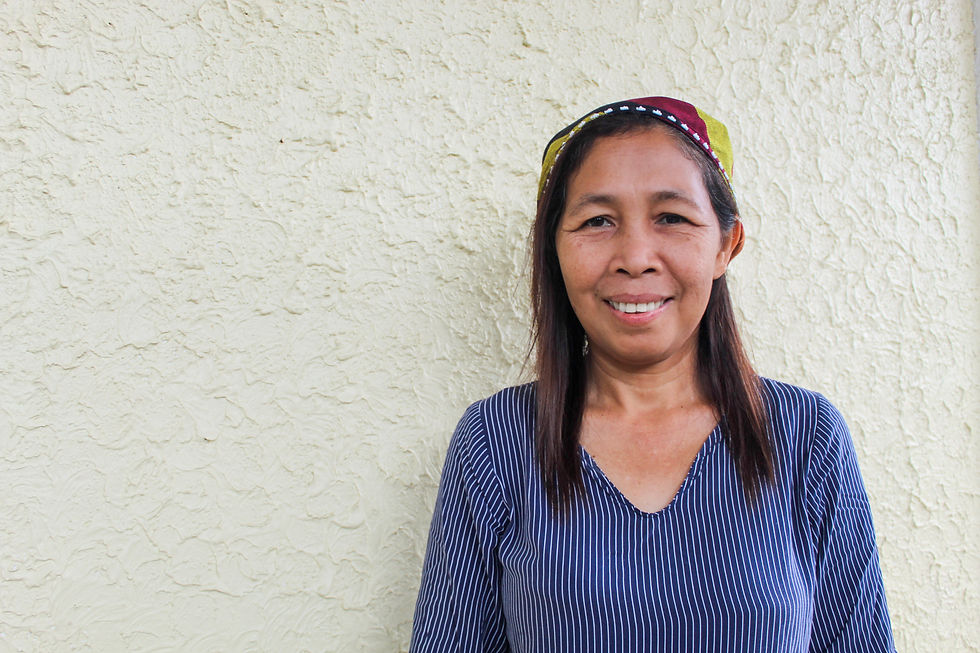
NTFP-EP Philippines is exploring a new content series where we’ll show you the different NTFP stories in our country, and we begin this series with the story of Loreta Alsa, fondly known as Ate Inday, a 52-year-old Tagbanua woman, long-time member of SAKTAS and a member of the NTFP-EP Philippines Palawan team. She traces SAKTAS’ organizing and enterprise journeys to around three decades of community work. This long history runs alongside her own years of helping strengthen Indigenous livelihoods in Palawan. Discover her journey and her own indigenous community’s journey with wild forest honey. Their kinship with the forest shows a community continuing to protect the forest that gives.
"So, yung forest honey (at gubat), magkadugtong talaga siya. Kasi kung walang gubat, walang mga puno na namumulaklak. Kasi kahit may gubat, tapos kung walang mga puno namumulaklak, ay wala rin sisipsipin na mga nectar ang bubuyog."
(Forest honey is truly interconnected with everything. If there is no forest, there are no flowering trees. And even if there is a forest, without flowering trees, there will be no nectar for the bees to gather.)
For Ate Inday, forest honey is inseparable from the forest itself. If there are no flowering trees, bees have nowhere to gather nectar. If there are no bees, there is no honey. If this relationship breaks, one living thread connecting Tagbanua livelihood, culture, and forest care begins to loosen.
THE JOURNEY BEGINS IN A FLOWERING FOREST
A bottle of wild honey goes way beyond harvesting. It begins earlier, when the forest blooms. For bees, a healthy forest means food, shelter, water, and its compass. Flowering trees guide bees where to travel and what they gather. Rivers and streams allow them to drink and sustain the process where they transform nectar and pollen into honey.
Among the Tagbanua, there is the story of the pukyutan, or Apis dorsata. This story carries this understanding of the indigenous community that they are one with the forest and the bees. In one telling, Parangat/team leader/Giant bee travels through the mountains to look for flowering trees. Once the blooms are found, Parangat returns to guide other bees. Some bees gather nectar; others guard the young; and others search for suitable places to stay and build for the future.
Their homes are often found near rivers and streams. Told lightly, this story depicts the many relationships that form honey: these are the flowers, water, trees, seasons, shelter, protection, and a community or ecosystem of beings working together to sustain life. Ate Inday sees this same relationship in the forests around her.
"Kung maganda ang iyong biodiversity, maraming mga bubuyog ang naroon. Kasi kung walang mga puno na namumulaklak, hindi rin sila manirahan doon sa gubat na iyon."
(When biodiversity is healthy, many bees can be found there. Without flowering trees, they would not live in that forest.)
Photos taken by Ate Inday during a forest monitoring activity in February 2026 in Aborlan.
While the presence of bees tells something about the health of the forest, their absence also holds meaning, and most often than not, a warning. Where flowering trees, water sources, and intact forest spaces are abundant; so will bees be able to continue their work. Where forests are degraded, rivers are harmed, or chemical use that threaten pollinators dominate; so does the forest honey’s journey become ever more uncertain.
Forest honey may taste simple and sweet, but its journey to get to the bottle comes from complex and biodiverse relationships. Even one hive can reveal the forest’s abundance. During the honey season, Ate Inday shared that a single pukyutan hive can yield up to around 15 kilos of honey. But for SAKTAS, the richness of a harvest comes with safeguards to take only what is needed, so that the bees can return.
BEES FOLLOW THE WATER, THE TREES, AND THE SEASONS
For Ate Inday, the connection between the bees and the forest can be observed in the trees, felt in the seasons, and seen along rivers. She recalls that elders know the role of different flowering trees in the life cycle of bees. Some trees support the formation of the hive and others offer nectar that becomes honey. Still, there are others that provide places where bees prefer to attach their homes. Water is essential.
"Pag wala na rin ilog, wala na rin talagang bees. Konektado silang lahat."
(If the rivers disappear, so will the bees. They are all interconnected.)
Photos taken by Ate Inday during a forest monitoring activity in February 2026 in Aborlan.
For harvesters, the river may reveal signs that honey is near. Around riverbanks and stones, they’re able to observe traces connected to bees’ movements. These signs help them decipher whether a hive may be within the surrounding forest. This knowledge is deep and cannot be learned from a single manual. It is the Tagbanua traditional knowledge and practice carried through decades of attention. Walking the forest, listening to elders, observing flowering seasons, knowing the trees, knowing the river, knowing when the bees have arrived – to the learned Tagbanua, these are the different ways the forest communicates.
With this way of seeing, they know that honey is produced not by bees alone. Forest honey is made possible by an entire forest community — from the healthy soil to the roots holding the soil, from rivers that give water to the flowering trees, from the bees that carry the pollen to the people who respect these intertwining lives belonging together.
BEFORE THE HARVEST COMES PAUSE. THE COMMUNITY KNOWS HOW TO LISTEN FIRST.
When the forest honey is ready, the next part of its journey begins not with immediate extraction, but with a pause. It begins through listening. Tagbanua harvesters know that the forest has its own timing. They watch the comb for signs of maturity. Ate Inday describes tutub as the mature, sealed portion of the honeycomb that signals the honey may already be harvested. Harvesters also look at the flowering and falling of certain tree species; they observe the season and understand that not every hive should be harvested immediately.
Honey cannot be forcibly extracted. It arrives at its own time. The harvest must happen when the time is ripe. For SAKTAS, this careful attention is also intertwined with cultural respect. Before entering particular spaces in the forest or when gathering resources, there are rituals or certain practices to ask for permission first. There are prayers known only by the community and which are passed through generations.
"Mayroong secret prayer yung mga taong mag-harvest… Bago kami mag-harvest."
(The people who harvest have a secret prayer… before we begin harvesting.)
The prayer cannot be shared here in detail. But what’s important is what it reveals: that forest honey is not merely an object to be collected, but a relative and part of a living relationship. For the Tagbanua, the forest holds life because it has everything that their community needs to live and thrive – it has food, medicine, honey, memory, identity, wisdom and presences that require humility. Harvesting, for the community, is also recognizing that people are entering a world already alive with relationships.
It begs to show that this sacredness is not beyond sustainability. In fact, it is one of its deepest roots and origins. This indigenous way of harvesting and respecting forest honey is one of the reasons why the forests of Palawan stand tall up to these modern times.
When a community sees honey as something to receive part of its own community, something that’s there not simply to be extracted, restraint comes naturally. Care and safeguarding the forest becomes part of life. The future of the bees matters because the relationship matters.
HARVESTING HONEY WITHOUT DESTROYING THE HIVE
Once honey is ready, the harvesting process determines whether the journey can continue.
As forest honey developed from household food into an enterprise product, SAKTAS strengthened harvesting practices to ensure that increased demand would not mean the destruction of the bees that make the livelihood possible. Harvesters are taught not to take the entire hive. They gather the mature honey portion while leaving behind the young bees and the parts needed for the colony to survive and return.
"Kunin lang ang parte ng comb na may honey upang mapagkunan muli."
(Take only the part of the honeycomb that contains honey, so the hive can continue producing for future harvests.)
This is one of the clearest expressions of sustainable harvest: take what can be taken, while leaving life enough room to continue. Ate Inday also contrasts Tagbanua harvesting practices with destructive methods sometimes used elsewhere. Instead of burning the hive and killing the bees, harvesters use traditional smoke to gently move them away from the comb.

"Hindi talaga siya susunugin. So may pamamaraan. Mayroon kaming traditional na smoke… mahihilo lang siya yung bees. So hindi siya mamamatay."
(We do not burn it. There is a proper way to harvest. We use traditional smoke… it only makes the bees dizzy, so they are not killed.)
The knowledge is both practical and ethical. The bees are recognized as the very beings making future harvests possible and not merely obstacles to harvest. This is the heart of responsableng pag-aani or responsible harvesting. It goes beyond producing honey for one season; it is about ensuring that the bees, forests, livelihoods, and stories remain alive for many more seasons that follow the current harvest season.
FROM WILD COMB TO CLEAN HONEY
After the forest and the bees have done their part, and after harvesters have gathered honey responsibly, the next stage of the journey happens at the community level: processing. SAKTAS’ honey remains wild forest honey, gathered from bees that forage freely among the flowers and flowering trees of Palawan’s forests. Its purity comes from its forest origin and from a process that protects this pure quality.
Ate Inday remembers a time when honey was primarily gathered for household food. It was squeezed by hand and stored in locally available containers, including traditional forest-based materials such as palm and bamboo.
"Kasi noon, ano lang eh, katutubong pagkain lang namin yun."
(Back then, it was simply part of our traditional Indigenous food.)

Honey was eaten with cassava, banana, and other available food from the forest. Beeswax and honeycomb also had value in cultural practices, including those connected to planting and prayer. But when honey became part of a community enterprise and began reaching consumers beyond the community, SAKTAS needed a more systematic way to maintain cleanliness, quality, and consumer safety.
Through capacity building and technical support involving NTFP-EP Philippines and partner organizations, SAKTAS strengthened its harvesting and processing system. Honeycomb is now handled using cleaner collection methods and brought to the collection center, where trained community members manage the processing. The comb is cut and allowed to drip naturally and not carelessly squeezed. Leaves and other debris are removed. Equipment such as knives and containers are increasingly stainless. Bottles and containers are sterilized. Community Enterprise development team members have received training in hygiene and Good Manufacturing Practices.
For Ate Inday, this amount of care and cleanliness in the processing of forest honey reflects the nature of the bees themselves.
"Ang bees ay napaka-clean, malinis talaga. Kaya sinisikap din natin na yung honey natin na aani mula sa kanila, pagdating sa baba, yung process ay dapat malinis din."
(Bees are very clean, truly clean. That is why we also make sure that the honey we harvest from them is handled cleanly once it is brought down to the market, the processing should also be clean.)
This is what makes SAKTAS’ forest honey more than a raw product gathered from the wild. It is wild honey handled through community care, strengthened protocols, and disciplined hygienic processing.
It carries the story of the bees and the forest into the bottle without losing respect for where it came from.
"Gusto namin na makita nila yung totoong may kalidad na honey… dapat inaalam nila kung ano yung proseso ng honey mula doon sa pinanggalingan at kung ito ba ay malinis o hindi."
(We want people to see what truly good-quality honey is… They should learn about the process the honey goes through, from where it comes from to whether it has been handled cleanly.)
For consumers, this is an invitation to ask deeper questions. Not only: Is this honey sweet? But: Where did it come from? Were the bees protected in the harvesting process? Was the honey processed cleanly? Did the community that cared for the forest benefit from it? Because not every bottle of honey carries the same intimate relationship with the forest and its inhabitants.
FROM FOOD AND CULTURE TO COMMUNITY ENTERPRISE
Forest honey has long been part of Tagbanua life. Through SAKTAS, it also became part of a larger journey toward community voice, livelihood, and recognition. Ate Inday recalls that SAKTAS grew within a wider period of Indigenous organizing in Palawan, when communities sought to respond to discrimination and to the lack of recognition and support they experienced from institutions. Organizing into community associations created a way for Indigenous Peoples to speak collectively about their rights, needs, livelihoods, and future.
"Sabi ng pari, mag-buo tayo. Kasi pag nag-buo tayo ng mga samahan sa bawat komunidad, baka mapakinggan tayo ng ating gobyerno, ano man ang mga hinaing natin."
(The priest advised to form a group. Because if we create a group in every community, the government is bound to listen to us, whatever our concerns are.)
SAKTAS’ honey enterprise grew from this spirit of collective work. The scale of honey in Sagpangan has also shown what a healthy forest can provide. Ate Inday recalls that in 2013, NATRIPAL alone collected around 12 tons of honey from Sagpangan, aside from honey that moved through other channels. More than a production figure, this was a living measure of a landscape able to sustain flowering trees, bees, harvesters, and community livelihood together.
During the current honey season, Ate Inday estimated that around 20 tons of honey may already have come out of the area, indicating the forest’s continued abundance and the scale of livelihood it is able to support. Through forest honey, community members gained an additional livelihood source connected to knowledge they already carried. Honey harvests have helped families meet everyday needs, provide for children, improve homes, and create value from the forest without cutting it down.
But because honey is seasonal, challenges like markets, capital, transport, permits, and regulations still affect whether communities can fairly sell what they sustainably harvest. For Indigenous community enterprises, conservation alone is not enough; support systems must also recognize and enable their right to benefit from responsibly managed forest resources.
Ate Inday explains the relationship plainly:
"Pag bumili talaga ng honey, bukod sa nagbibigay ka ng kabuhayan doon sa mga katutubo, ay ma-sustain talaga yung gubat."
(When you buy honey, you are not only providing livelihood for Indigenous communities; you are also helping sustain the forest.)
When consumers support sustainably harvested forest honey, they are not only purchasing a product. They are helping sustain a livelihood that has reason to keep forests healthy, flowers blooming, rivers protected, and bees returning. This is why forest honey matters to the work of NTFP-EP Philippines.
It brings together three inseparable areas of community life:
Community-Based Livelihoods and Enterprise Development through dignified and ecologically responsible income;
Community-Based Conservation and Resource Management through harvesting practices that depend on and encourage healthy forests; and
Safeguarding Culture through knowledge, values, traditions, and relationships carried by the Tagbanua community.
Forest honey is livelihood, conservation, and culture that is alive in practice.
THE WOMEN WHO CARRY HONEY FORWARD
Ate Inday’s story also reveals the work of Indigenous women in sustaining community enterprises. Women are often present in the many careful stages that help a forest product become a dignified community product: organizing, processing, cleanliness, quality control, training, storytelling, marketing, and protecting the meaning behind what is sold.
For Ate Inday, working with SAKTAS and other Indigenous community enterprise efforts strengthened not only her knowledge, but also her pride in her own identity.

"Mas proud ako sa pagiging katutubo ko, kasi… marami akong naishe-share na kaalaman, na dapat ganito yung gawin natin, para ang produkto natin mabenta."
(I am prouder than ever for being Indigenous because I have so much knowledge to share, knowledge about how we should practice things so that our products can be sold.)
She has walked to communities, supported trainings, shared what she learned, and worked to help Indigenous products become more recognized for their value and quality. In doing so, the journey of forest honey also became part of her own journey as a Tagbanua woman. When asked how she would describe her journey, her answer came with warmth and certainty:
"Katutubo ako, kayang-kaya ko."
(I am indigenous, and I am capable.)
While a personal statement from Ate Inday, it also holds the strength of many Indigenous women whose knowledge and labor keep community enterprises alive. These women understand that producing a good bottle of forest honey is also an act of caring for relationships with buyers, with family, with community, with bees, and with the forest. In the hands of women like Ate Inday, forest honey becomes a statement: our knowledge has value; our livelihoods deserve support; our forests are alive because communities continue to care for them.
WHAT A BOTTLE OF FOREST HONEY ASKS OF US
By the end of the journey, forest honey reaches consumers as something golden, fragrant, and sweet, but behind every bottle of SAKTAS’ wild forest honey, we now know that:
There is a flowering tree.
There is a river that still runs clean.
There are bees that found a home.
There are elders whose wisdom continue through the next generation.
There are harvesters who know to take only what the hive can give.
There are women who help keep the product clean and connected to community life.
There is a forest that must remain standing for the journey to begin again.
Ate Inday imagines what the bees themselves might ask of people:
"Kung ako si bubuyog, wag niyong sirain ang gubat. Lalo’t higit ang mga namumulaklak na mga puno na pinagkukunan namin na mga nectar para maging honey. At ingatan niyo din ang ilog."
(If I were a bee, I would say: do not destroy the forest, especially the flowering trees from which we gather nectar to make honey. And please take care of the river, too.)
This May, as we feature forest honey as one of the living non-timber forest products of Indigenous communities in the Philippines, SAKTAS reminds us that honey comes from an interwoven ecosystem of relationships between forest and river, flower and bee, knowledge and respect, culture and livelihood, women and community, harvesting and protection. And to support sustainably harvested community forest honey is to honor this web. When you buy sustainably harvested community forest honey, it is to support sustainable livelihoods, it is to sustain forests standing tall, and it is to recognize that Indigenous Peoples are knowledge holders and forest stewards.
Forest honey begins with relationships of bees, blooms, and water. It continues through Indigenous knowledge and responsible hands, and it returns once again as a reason for the forest to remain alive.


Comments